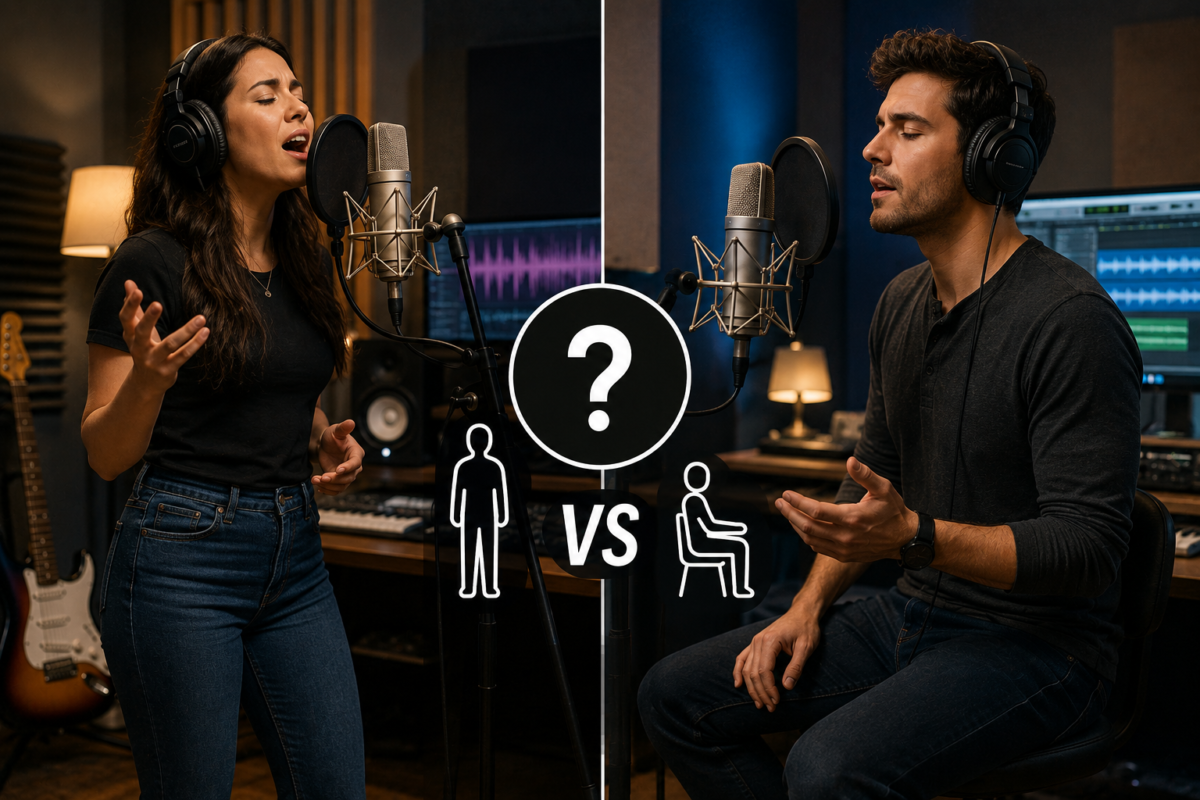
When recording vocals, standing is generally the better choice for most singers. It can make it easier to breathe deeply, maintain good posture, project your voice, and deliver a more energetic performance.
However, sitting is not automatically wrong. The best position is the one that allows you to sing comfortably, breathe naturally, stay consistent near the microphone, and give your strongest performance. If sitting helps you relax and produce a better take, it may be the right choice for you.
The decision is not simply about whether standing or sitting is “correct.” It depends on your vocal style, song, physical comfort, recording setup, and ability to maintain proper posture.
Why Many Singers Prefer Standing
Standing gives your body more freedom to move. Your ribs, abdomen, chest, neck, and shoulders can expand naturally as you breathe. This can be especially helpful when singing long phrases, powerful choruses, high notes, or emotionally intense sections.
When you stand correctly, your body is naturally arranged in a way that supports vocal performance. Your feet can stay grounded, your spine can remain tall, and your shoulders can stay relaxed. This creates a stable foundation without making your body feel stiff.
Standing may also help you feel more connected to the song. You can use natural hand gestures, move slightly with the rhythm, and bring more physical energy into your delivery. That extra movement can make a major difference when recording pop, rock, R&B, gospel, musical theater, or other expressive styles.
Good standing posture can also help prevent unnecessary tension. When the head, neck, shoulders, and spine are aligned, you are less likely to push your chin forward, collapse your chest, or tighten your throat while singing.
That said, standing does not automatically improve every vocal recording. If you lock your knees, raise your shoulders, lean too far forward, or sway constantly, standing may create new problems. The goal is not to stand like a statue. The goal is to remain balanced, relaxed, and ready to breathe.
How Standing Can Support Breathing
Breath control is one of the main reasons singers choose to stand while recording. Singing requires controlled airflow, and your posture affects how freely your body can manage that air.
A useful standing position includes:
- Feet about hip-width apart.
- Knees relaxed rather than locked.
- Hips balanced under the ribs.
- Chest comfortably lifted without being forced upward.
- Shoulders relaxed.
- Head balanced over the neck.
- Jaw and tongue free from unnecessary tension.
Your body should feel tall, but not rigid. Imagine that the top of your head is gently lifting upward while your feet remain connected to the floor.
This position gives your rib cage and abdomen room to respond as you inhale and sing. You should not force your stomach outward or try to take an enormous breath before every line. Instead, allow the breath to enter quietly and let your body manage the airflow gradually.
Standing can be particularly useful for vocal parts that require:
- Long phrases.
- Strong volume.
- Sustained notes.
- Fast lyrics.
- Belting.
- Vocal runs.
- Dramatic emotional changes.
- Frequent movement between chest voice and head voice.
A recent study examining sitting and standing during voice-range-profile performance found no significant difference in the measured vocal parameters between the two positions for healthy, untrained participants. This suggests that standing is not a magic solution; posture quality and the individual singer’s response matter more than the position alone.
In other words, standing may provide better physical freedom, but it will not automatically make your voice better. A comfortable singer with good alignment can often perform well in either position.
Is Sitting Bad for Recording Vocals?
No. Sitting is not bad for recording vocals as long as you sit in a way that supports your voice.
The problem is usually not the chair itself. The problem is slouching.
When singers sink into a chair, their chest may collapse, their shoulders may round forward, and their abdomen may become compressed. This can make breathing feel restricted and may encourage tension in the neck or throat. Slouching can also change the distance between your mouth and the microphone, creating unwanted changes in volume and tone.
Sitting can work well when you:
- Keep both feet flat on the floor.
- Sit toward the front or middle of the chair rather than sinking into the back.
- Keep your spine long.
- Let your shoulders rest naturally.
- Keep your head level.
- Avoid crossing your legs.
- Leave enough space for your abdomen and ribs to move.
- Keep your body facing the microphone.
A firm chair without bulky armrests is often more practical than a soft couch. A couch may feel comfortable, but it can encourage you to sink into an uneven position. An adjustable stool can also be useful because it allows you to sit tall while keeping your feet supported.
Sitting may be the better option when you are recovering from an injury, recording for a long period, dealing with fatigue, or performing a softer and more intimate vocal. Some singers feel more relaxed when seated, and relaxation can improve pitch, tone, and emotional delivery.
Sitting can also be useful during songwriting sessions, vocal editing, or repeated takes. If you need to operate your recording software between takes, a seated setup may be easier and more efficient.
The key is to make sure your seated position does not reduce your breathing space or cause you to collapse toward the microphone.
Standing Versus Sitting for Different Vocal Styles
The best position may change depending on the type of vocal you are recording.
Pop and Rock Vocals
Standing is often helpful for pop and rock vocals because these styles may require energy, strong projection, and physical expression. Standing can make it easier to use your entire body and deliver a powerful chorus.
If you are recording a softer verse followed by a large chorus, you can still stand for both sections. Instead of changing positions, adjust your energy, breath pressure, facial expression, and distance from the microphone.
Ballads and Intimate Vocals
Sitting may work well for quiet ballads, acoustic songs, and intimate performances. A seated position can help some singers feel calm and focused, especially when the performance depends on subtle emotion rather than physical power.
However, sitting should not mean becoming inactive. Keep your feet grounded, maintain a tall spine, and allow your ribs to expand. A relaxed seated performance can sound warm and close without becoming breathy or weak.
Rap and Spoken Vocals
Rappers and spoken-word performers may use either position depending on their delivery. Standing can help with fast flows, aggressive projection, and high-energy performances. Sitting may be convenient for long sessions or more conversational styles.
The most important factors are rhythmic control, consistent microphone distance, clear articulation, and enough breath to complete each phrase. If sitting causes you to lean toward the microphone during intense lines, standing may be more reliable.
High Notes and Belting
Standing may give you more room to manage high notes and powerful phrases, but it does not guarantee easier singing. High notes should not be forced by pushing the body forward or raising the shoulders.
Whether sitting or standing, keep your neck relaxed and avoid lifting your chin to reach the note. A balanced posture helps you maintain a more consistent vocal tract shape.
Harmonies and Background Vocals
Sitting can be practical when recording many harmony parts. You may spend a long time repeating short sections, checking pitch, and moving between tracks. If sitting helps you remain focused and comfortable, it can be a smart choice.
Just remember that harmonies still need proper breath support and consistent mic technique. A tired, slouched posture can affect tone even when the vocal part seems easy.
Microphone Position Matters More Than You Think
Your posture and microphone technique work together. You can have excellent body alignment, but the recording may still sound inconsistent if you move too close or too far away from the microphone.
Set the microphone at a height that allows you to keep your head level. If it is too low, you may bend your neck or look downward. If it is too high, you may lift your chin or strain to reach it. A properly positioned microphone encourages a natural posture.
Use a pop filter between your mouth and the microphone. A practical starting point is to place your mouth several inches from the pop filter, then adjust the distance based on your microphone, room, voice, and desired sound.
Try to keep a consistent distance during normal singing. If you move forward for quiet lines and slightly backward for louder sections, do it smoothly and repeatably. Sudden movements can create large volume changes, tonal differences, or proximity-effect buildup.
A producer may ask you to move closer for a softer, more intimate sound or step back slightly for a loud section. This can work well, but it should be controlled rather than random.
The microphone should also be positioned so you do not need to twist your body, bend your neck, or lean sideways. Face the microphone naturally and keep your mouth directed toward the capsule.
Why Consistency Is Important
The best vocal position is the one you can repeat from take to take.
Imagine recording a verse while sitting, a pre-chorus while standing, and the chorus while leaning toward the microphone. Even if every section sounds good by itself, the tone and volume may change noticeably when the parts are combined.
Consistency helps your vocals sound more natural during editing and mixing. It also makes it easier for the engineer to compare takes, comp the best phrases, and apply compression or equalization without correcting large performance differences.
Before recording, choose a position and test it with a short section of the song. Listen for:
- Vocal tone.
- Breath comfort.
- Pitch stability.
- Energy.
- Mic distance.
- Jaw and neck tension.
- Volume consistency.
- Ease of repeating the performance.
Record the same line while sitting and standing if you are unsure. Do not judge only by how the position feels. Listen back to both recordings and ask which one sounds more controlled, expressive, and natural.
Sometimes a singer feels more powerful while standing, but the recording sounds tense. Another singer may feel relaxed while sitting, and the final vocal may sound better. Your ears should help make the final decision.
Common Problems When Standing
Standing is useful, but poor standing posture can hurt your recording.
Locking Your Knees
Some singers lock their knees because they are trying to stand perfectly still. This can make the body feel rigid and may increase tension. Keep your knees soft and allow your weight to remain balanced.
Leaning Into the Microphone
Leaning forward can compress your body and change the sound as you get closer to the microphone. Stand or sit tall enough that the microphone comes to you rather than forcing your body toward it.
Raising the Shoulders
When singers take a breath, they sometimes lift their shoulders. This often creates visible tension and makes breathing feel less natural. Let the shoulders remain quiet while the ribs and abdomen respond to the breath.
Swaying Too Much
Movement can add emotion, but excessive swaying may change microphone distance and create uneven recordings. Use small, natural movements and return to a reliable center position.
Standing Without Grounding
If your feet shift constantly, your performance may feel unstable. Place your feet comfortably apart and let your weight distribute evenly. You can still move, but begin from a stable base.
Common Problems When Sitting
Sitting can also create posture issues that affect the voice.
Slouching
Slouching is the biggest concern. It can reduce the space available for breathing and make the tone sound less open. Sit tall without pressing your back unnaturally against the chair.
Crossing Your Legs
Crossing your legs may cause your hips and spine to rotate. It can also make it harder to keep your feet grounded. Place both feet on the floor when recording important vocal parts.
Sitting Too Far Back
A deep chair may encourage you to relax into a rounded position. Sit toward the front portion of the seat if that helps you keep your spine long and your chest comfortable.
Turning Toward the Screen
If your computer is positioned to one side, you may twist your neck while singing. Face the microphone first. Arrange your screen, keyboard, or remote controls so you can operate them without changing your vocal position.
Pressing the Abdomen
A tight waistband or cramped sitting position can make breathing uncomfortable. Wear clothing that allows your torso to move freely, especially during demanding songs.
A Simple Test to Choose Your Position
If you are deciding whether to sit or stand, try this quick recording test:
- Warm up your voice gently.
- Set the microphone and pop filter in a comfortable position.
- Record one verse and chorus while standing.
- Rest briefly.
- Record the same sections while sitting with good posture.
- Keep the microphone settings and room conditions the same.
- Listen to both takes at a similar volume.
- Compare comfort, tone, pitch, breath control, energy, and consistency.
Do not choose the louder take automatically. A louder vocal may simply be closer to the microphone or delivered with more force. Pay attention to which position gives you a balanced sound without unnecessary strain.
Also consider how your performance feels after several takes. A position that sounds good for one take may become tiring during a full session. The best recording posture should support both vocal quality and endurance.
When You Should Switch Positions
You do not have to use the same position for every part of a recording session. Some singers stand for lead vocals and sit for harmonies. Others stand for energetic songs and sit for spoken introductions or soft backing parts.
You may also switch positions when your body becomes tired. A short break, gentle stretch, or change in posture can help you reset your breathing and attention.
If you change from sitting to standing during the same song, make sure your microphone position remains consistent. You may need to adjust the stand or mark the floor so your mouth stays at the same height and distance.
You can also record difficult sections while standing and less demanding sections while sitting. This is perfectly acceptable as long as the tone and microphone technique remain controlled.
So, Is Standing or Sitting Better?
For most singers, standing is the best starting position when recording vocals. It usually provides more freedom for breathing, movement, projection, and emotional delivery.
But standing is not a requirement for a great vocal. Sitting can work just as well when you maintain an upright, relaxed posture and avoid compressing your body. Research has also found no significant vocal-range-profile advantage between sitting and standing in healthy, untrained participants, reinforcing the idea that posture quality matters more than the position by itself.
Choose standing when you need more energy, powerful projection, long phrases, or physical expression. Choose sitting when it helps you stay comfortable, focused, relaxed, or efficient during a long recording session.
The most accurate answer is simple: record in the position that gives you the best performance without tension. Keep your posture balanced, your breathing natural, and your distance from the microphone consistent. If you can do those things, both sitting and standing can produce an excellent vocal recording.